
The Argument From Miracle Reports
Why Miracle Reports are Evidence for Theism

Introduction
Throughout history, human beings have reported events which appear extraordinarily difficult to explain in purely naturalistic terms. These reports include cases of apparently inexplicable healings, prophetic experiences, Marian apparitions, incorrupt bodies, levitations, near-death experiences, and other phenomena traditionally classified as miracles. While many such reports are undoubtedly fraudulent, exaggerated, or mistaken, it is at least not obvious that all of them are easily dismissed. Indeed, anyone who seriously investigates the relevant literature with an open mind will quickly discover that at least some alleged miracle reports are epistemically stubborn in a way that demands explanation.
Now, I am not claiming that every purported miracle is genuine, nor that we can establish with certainty that any particular miraculous event occurred. Human testimony is fallible, and extraordinary claims require — if not extraordinary evidence (pace Carl Sagan) — then at least very careful scrutiny. Nevertheless, the existence of at least some apparently well-evidenced miracle reports is itself a striking feature of reality — one which fits better with a theistic worldview than within a purely naturalistic one.
For on theism, miracles are not especially surprising. If God exists and possesses both the power and the desire to reveal himself to rational creatures, then we should, plausibly, expect at least occasional instances of purposive supernatural activity within the world. By contrast, on a strictly naturalistic worldview, genuinely miraculous phenomena are metaphysically impossible. The naturalist must, therefore, maintain either that all such reports are ultimately mistaken or that there exists some entirely natural explanation even for the most puzzling cases.
In the present essay, I argue that certain miracle reports constitute at least modest evidence for theism. I begin by clarifying what is meant by a “miracle” and distinguishing the relevant claim from a simple argument from ignorance. Second, I examine the epistemology of testimonial evidence, considering both David Hume’s famous critique of miracles and a modest defense of the principles of credulity and testimony. Then, I argue that the widespread and persistent existence of apparently credible miracle reports is more naturally expected on theism than on strict naturalism and, therefore, provides at least some evidence favoring the former worldview. Finally, I consider some obvious objections.
1. What Is a Miracle?
Miracles are often characterized as “violations” or “contraventions” of the laws of nature. This formulation, associated especially with David Hume, is rhetorically vivid but philosophically misleading.
For one thing, the metaphysical status of laws of nature is itself highly contested. Philosophers disagree about whether laws are genuine governing features of reality or merely descriptions of the regular patterns we observe in nature. Given these disagreements, it is not entirely clear what it would mean for a law of nature to be literally “violated.”
More importantly, the language of “violations” can suggest an overly crude picture in which God periodically “breaks” the universe He created, as though divine action must somehow compete with the ordinary operation of nature. But classical theists have generally not understood miracles in this way.
A more plausible characterization is that miracles are extraordinary events apparently involving purposive supernatural agency. Such events need not involve logical contradictions or metaphysical impossibilities, nor need they involve literal suspensions of natural regularities. Rather, miracles are events which appear unusual, purposive, religiously significant, and resistant to straightforward naturalistic explanation.
Importantly, this does not mean that every unexplained event should be regarded as miraculous. Human knowledge is limited, and many phenomena once attributed to divine agency later received entirely naturalistic explanations. Consequently, the argument developed in this essay is not a simple “God of the gaps” argument from ignorance.
Instead, the question is best understood in comparative and probabilistic terms. For the question, by my lights, is not whether science can presently explain every alleged miracle, but instead whether the existence of widespread and sometimes apparently credible miracle testimony is more antecedently expected on theism than on atheistic naturalism.
2. Testimony, Credulity, and Rational Belief
At this point, many will object that miracle reports are inherently unreliable because they depend heavily upon testimony. However, our knowledge of the world depends pervasively upon testimonial evidence. Most people believe in the existence of historical events, scientific findings, distant geographical locations, and countless ordinary facts primarily on the basis of testimony. Indeed, it would be practically impossible to function without extensive reliance upon the reports of others.
Of course, testimony is fallible. People lie, exaggerate, hallucinate, misremember, and misunderstand. But it does not follow that testimony is therefore epistemically worthless. Rational inquiry requires weighing testimony in light of context, witness credibility, corroboration, institutional scrutiny, and competing explanations.
This point is especially important in connection with David Hume’s famous critique of miracles. Hume argues that a rational person should never believe testimony concerning a miracle because it will always be more probable that the testimony is mistaken than that a miracle actually occurred (Hume 1748/2000). Hume’s argument has been enormously influential, but many philosophers have argued that it overreaches.1
John Earman (2000), for example, argues that Hume effectively stacks the deck by assigning miracles an overwhelmingly low prior probability from the outset. But if one already assumes that miracles are virtually impossible, then naturally all testimonial evidence for miracles will appear insufficient. The argument, therefore, risks begging the question against theism.
Likewise, Richard Swinburne argues for what he calls the Principle of Credulity and the Principle of Testimony. Roughly speaking, the Principle of Credulity states that, absent special defeating conditions, we should generally trust things as they appear to us. If it seems to a subject that she experiences X, then, ceteris paribus, that provides at least some prima facie reason to think that X occurred. Similarly, the Principle of Testimony holds that, absent reasons for doubt, we generally ought to regard the reports of others as truthful and reliable (Swinburne 2004).
Of course, these principles are defeasible. Testimony may be undermined by evidence of deception, unreliability, psychological instability, ideological motivation, or competing explanations. But it is methodologically questionable simply to dismiss all miracle testimony in advance. Such blanket skepticism is difficult to reconcile with the central role testimony plays in ordinary life.
3. The Argument From Miracle Reports
At this point, the general structure of the argument should be clear. The central claim is not that any particular miracle report has been conclusively verified, nor that miracle reports establish the truth of any specific religion, but rather that the widespread and persistent existence of apparently sincere and sometimes surprisingly evidential miracle testimony is more naturally expected on theism than on strict naturalism. We can state the argument in standard form as follows:
1. There exist widespread and sometimes surprisingly well-evidenced reports of miraculous phenomena.
2. On theism, the existence of such reports is not especially surprising. If God exists and sometimes acts within the world, then we should expect at least some people to report miraculous experiences and events.
3. On strict naturalism, all such reports must ultimately be explained entirely in terms of fraud, error, misperception, coincidence, cognitive bias, social contagion, or other wholly natural causes.
4. Consequently, the widespread and persistent existence of apparently credible miracle reports is somewhat more expected on theism than on strict naturalism.
Therefore,
5. Miracle reports constitute at least modest evidence for theism over strict naturalism.
4. Some of the Strongest Miracle Reports
Not all miracle claims are equally impressive. Many are weakly evidenced, legendary, or clearly dubious. But there are at least some cases which serious scholars — including scholars who are neither gullible nor religious fundamentalists — regard as surprisingly difficult to dismiss confidently.
One important category involves medically inexplicable healings associated with the Sanctuary of Our Lady of Lourdes. The Catholic Church itself rejects the overwhelming majority of healing claims brought before it, and only a very small number are officially recognized as miraculous after prolonged medical investigation. Cases are reviewed not merely by clergy, but by physicians and medical review boards applying relatively demanding criteria. The disease must be serious and well-documented, the cure must be rapid or sudden, the recovery must be complete, and the improvement must be enduring over time (Rufin 2010).
Of course, “medically unexplained” does not entail “supernatural”. Misdiagnosis, spontaneous remission, and placebo effects are all real phenomena. Nevertheless, some Lourdes cases remain difficult to explain straightforwardly in naturalistic terms, especially when considered cumulatively.
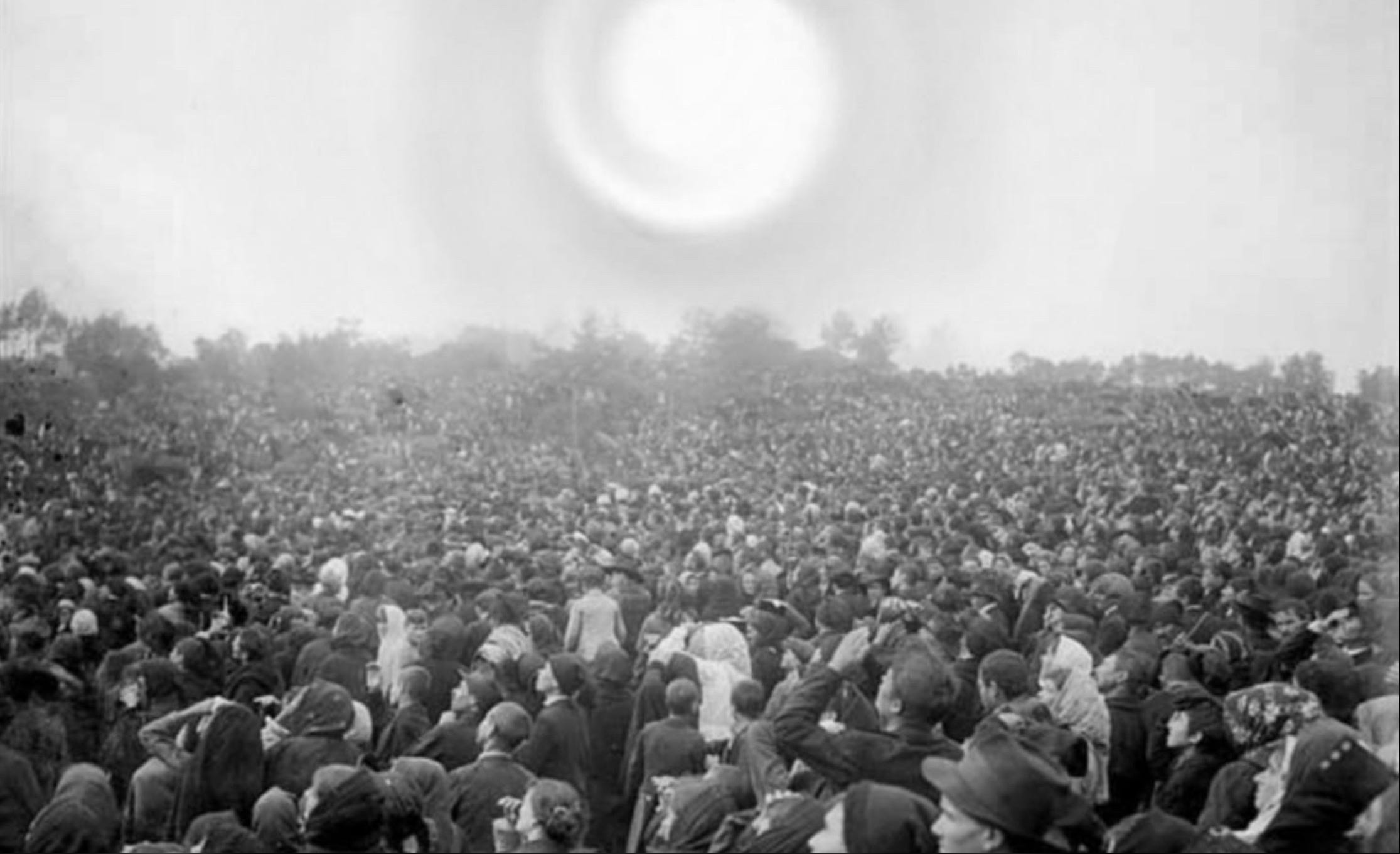
The events at Fátima in 1917 are likewise noteworthy. According to numerous reports, tens of thousands of people gathered after repeated predictions by three Portuguese children that a miraculous sign would occur. Witnesses subsequently described unusual solar phenomena, atmospheric changes, and related visual experiences. Importantly, reports were not confined solely to devout believers; secular newspapers and skeptical observers documented aspects of the event as well (De Marchi 1952). Naturalistic explanations have certainly been proposed, but the scale and persistence of the testimony remain striking.
Near-death experiences present another interesting category. While many naturalistic explanations have been proposed, some researchers argue that at least a subset of cases involve apparently veridical perceptions occurring during periods of severely compromised brain activity (Greyson 2010). Again, none of this conclusively establishes supernatural causation. But it does complicate simplistic materialistic assumptions about consciousness.
Perhaps the most historically significant miracle claim, of course, is the resurrection of Jesus of Nazareth. Here the evidential terrain becomes especially complex and controversial. Nevertheless, philosophers and historians have argued that the post-crucifixion experiences of Jesus’s followers, the rapid emergence of resurrection belief, and the origins of the Christian movement collectively require serious explanation.
Finally, the sheer scope of the global miracle literature deserves emphasis. Craig Keener’s massive two-volume work Miracles (2011) compiles thousands of reports from across cultures and historical periods, many involving detailed testimony, corroboration, and medical documentation. Naturally, the existence of numerous reports does not by itself establish their truth. But the cumulative persistence and cross-cultural recurrence of apparently sincere miracle testimony is itself an important datum.
Again, my claim is modest. I am not, for present purposes, arguing that any particular miracle report has been conclusively verified. Rather, I am arguing that the existence of a vast and persistent body of apparently sincere and sometimes surprisingly evidential miracle testimony is itself more naturally expected on theism than on strict naturalism.
5. Why Miracle Reports Are More Expected on Theism
On theism, the widespread existence of miracle reports is not especially surprising: if God exists and occasionally acts in the world, then we should expect at least some people to report experiences or events they interpret as miraculous. God’s reasons for acting in this way could be many. Miracles might serve as a means of communication, drawing attention to particular religious truths or revelations. They might function as signs authenticating prophets, saints, or religious movements. They might vindicate individuals whose claims or missions would otherwise lack credibility. They might strengthen the faith of existing believers, provide comfort during periods of suffering, or encourage moral and spiritual transformation. And, of course, some miraculous events might simply reflect divine compassion toward those in need.
The point is not that we can know God’s reasons in any particular case (though perhaps we can). Rather, the point is simply that theism provides a variety of intelligible reasons why a perfect being might sometimes act in unusual ways within the natural order and why reports of such actions might arise throughout human history.
6. Why Miracle Reports Are Unexpected on Naturalism
By contrast, on strict naturalism, the entirety of this vast body of miracle testimony must ultimately be reducible to wholly naturalistic causes: fraud, hallucination, cognitive bias, misinterpretation, coincidence, social contagion, or unknown natural mechanisms.
Now, perhaps this can always be done. But it is worth appreciating the scale of what must be explained away. Across cultures and historical periods, human beings have repeatedly reported experiences and events they interpret as involving supernatural agency. Many such reports are obviously unreliable. But others involve apparently sincere witnesses, substantial corroboration, medical documentation, institutional scrutiny, or unusual predictive features.
The point is that the sheer existence of this persistent and occasionally evidential body of testimony seems somewhat more antecedently expected if theism is true than if strict naturalism is true.
And if some phenomenon is more probable on one hypothesis than on another, then that phenomenon constitutes at least some evidence favoring the former hypothesis.
7. Objections
Critics have argued that miracle reports occur within incompatible religious traditions, that human beings are naturally prone to superstition and religious interpretation, and that the prior probability of miracles is so low that testimonial evidence could never justify belief in them. While these objections deserve serious consideration, I do not think any of them ultimately undermines the modest conclusion defended here.
7.1 Conflicting Religious Miracle Claims
One perennial objection is that miracle reports occur within many different religious traditions, often supporting incompatible theological claims. Christians report miracles. So do Muslims, Hindus, Buddhists, and practitioners of various folk religions.
This familiar fact does not touch the present argument. I have not argued that miracle reports establish any particular religion. Rather, I have argued that the widespread existence of apparently credible miracle reports is more naturally expected if some form of theism is true than if strict naturalism is true.
Indeed, if miracle reports occur across multiple religious traditions, that fact may itself be more naturally expected on theism than on naturalism. We might expect God to interact with people across cultures and historical periods rather than exclusively within a single religious community.
Consequently, even if the existence of conflicting miracle claims can seem to complicate attempts to infer a specific religion or theology, they do not undermine the modest conclusion that miracle reports provide at least some evidence for the existence of a supernatural reality.
7.2 Human Credulity and Religious Interpretation
Another objection is that human beings are psychologically disposed toward superstition, pattern-recognition, agency-detection, and religious interpretation. Cognitive scientists and evolutionary psychologists have argued that many religious beliefs may arise from ordinary features of human cognition rather than from genuine encounters with the supernatural.
This observation is undoubtedly correct. Human beings are prone to error. We frequently perceive patterns where none exist, infer agency where there is none, and remember extraordinary events selectively. Such tendencies surely account for many miracle reports.
Yet the existence of a psychological explanation for a belief does not by itself show that the belief is false. Human beings also possess evolved psychological mechanisms for perceiving physical objects, recognizing other minds, forming moral judgments, and engaging in logical reasoning. The mere fact that a belief has a psychological explanation tells us little about whether it is true.
More importantly, the present argument is comparative. The question is not whether psychological tendencies explain some miracle reports. They almost certainly do. The question is whether they adequately explain the entire phenomenon. Given the scale, persistence, and occasional evidential strength of miracle testimony, it is not obvious that appeals to human credulity completely resolve the matter.
7.3 The Prior Probability Objection
Perhaps the most influential objection traces back to David Hume. According to this line of reasoning, miracles are so extraordinarily improbable that no amount of testimony could ever justify belief in them. It will always be more likely that witnesses are mistaken than that a miracle actually occurred.
At first glance, this objection appears powerful. After all, ordinary experience teaches us that the laws of nature operate with remarkable regularity. If someone reports that a dead man returned to life or that a dramatic healing occurred instantaneously, skepticism is clearly appropriate.
The difficulty is that the force of this objection depends upon one’s broader metaphysical assumptions. If naturalism is already known to be true, then miracles are indeed exceedingly improbable. But if theism is a live possibility, the situation changes dramatically. A God capable of acting within the world could, in principle, produce events which would otherwise be extraordinarily unlikely.
Thus, the prior probability of miracles cannot be determined independently of the broader debate between theism and naturalism. To simply assume that miracles are maximally improbable is, in effect, to assume from the outset that theism is false. The objection therefore risks begging the very question at issue.
Furthermore, the present argument does not require us to conclude that any particular miracle report is genuine. It requires only the more modest claim that the widespread existence of apparently credible miracle testimony is somewhat more expected on theism than on strict naturalism.
7.4 Why Are Miracles Not More Obvious?
A final objection asks why miracles are not more frequent, dramatic, and universally persuasive. If God exists and wishes to reveal Himself, why are miracles not obvious to everyone?
This objection has considerable intuitive appeal, but it assumes that, if God performs miracles, he would do so in a manner that compels assent from virtually all rational observers. It is not at all obvious that this expectation is justified. A world saturated with undeniable miracles might undermine the stable regularities that make scientific inquiry possible. It might also diminish the role of ordinary reasoning, trust, and moral development. More importantly, a God interested in relationship rather than coercion may have reasons to provide evidence that is suggestive without being irresistible.
Whether or not one finds these considerations persuasive, they demonstrate that the existence of occasional, contested, and imperfectly evidenced miracle reports is not obviously inconsistent with theism.
Conclusion
The world contains an abundant and persistent body of apparently sincere and sometimes surprisingly credible miracle testimony. On theism, this is unsurprising. If God exists and sometimes acts within the world, then we should expect at least occasional reports of miraculous phenomena. By contrast, on strict naturalism, genuine miracles are metaphysically impossible. Consequently, the entirety of this vast body of miracle testimony must ultimately be reducible to wholly naturalistic causes. Perhaps this can always be done. But the cumulative existence of miracle reports nevertheless is arguably more expected on theism than on strict naturalism (even granting, arguendo, that the strict naturalist can offer a satisfactory account of the existence of a world in which miracles seem to some people to occur). Consequently, miracle reports constitute at least modest evidence favoring theism over strict naturalism.
References
De Marchi, John. 1952. The True Story of Fatima. New York: Farrar, Straus and Young.
Earman, John. 2000. Hume’s Abject Failure: The Argument Against Miracles. Oxford: Oxford University Press.
Greyson, Bruce. 2010. “Seeing Dead People Not Known to Have Died: ‘Peak in Darien’ Experiences.” Anthropology and Humanism 35 (2): 159–171.
Hume, David. 2000 [1748]. An Enquiry Concerning Human Understanding. Edited by Tom L. Beauchamp. Oxford: Oxford University Press.
Keener, Craig. 2011. Miracles: The Credibility of the New Testament Accounts. 2 vols. Grand Rapids, MI: Baker Academic.
Rufin, Serge. 2010. The Lourdes Medical Cures. New York: Word Among Us Press.
Swinburne, Richard. 2004. The Existence of God. 2nd ed. Oxford: Oxford University Press.
For my own take on Hume on miracles, see here:
https://reflectionsonwhatmatters.substack.com/p/some-musings-on-miracles
So this was going to be the topic of my dissertation under my then grad director Carlos Eire was at UVA and now at Yale. He has written a really nice volume entitled A History of the Impossible focusing on Theresa of Avila and Joseph of Cupertino - the Flying Fryar. I was at the time looking at exchanges between English Catholics and Anglicans in the 17th century. What many of the Anglican arguments boiled down to was ridicule of Catholic miracle claims (such claims were used as an apologetic to support Catholicism as the True religion. It became obvious to me that this same criticism would ultimately be aimed at Protestant dependence on the Scriptural miracles (and post-biblical miracle claims). In the Anglican criticisms the post-biblical Catholic miracles were just ridiculous - I found a work that was originally by a French Catholic that was a collection of animal miracles - most of them focused on venerating the Host - an Anglican priest translated the document into English and then added a lengthy preface that in essence said - look at how stupid and gullible these Catholics are they will believe anything. Of course my research was going to expand on the topic of miracles - especially the miracles of the Saints - whose miracles were done post mortem and were viewed as evidence (actually part of the evidence used in the 'trial' to prove the sanctity) that this person wasn't if Purgatory but was in the presence of God in Heaven and as such could directly intervene on a person's behalf. Anyway Carlos left UVA where I was a student - I was taking to long and didn't complete - mainly because there was no one left in the UVA religious studies department to support my efforts...and the job market sucked...
Jeffrey Kripal, in his scholarly book, The Flip, writes about “superhuman” phenomena experienced by scientists and scholars, people who he considers less gullible on average than the general population. He would support your argument that naturalism is unlikely to explain all of them. In “The Kitchen Episode” of my novel I posit one reason why God, if God exists, might not intervene in our world. In my epilogue and afterword I describe what sort of God would comport with our current understanding of cosmology. My arguments do not support the existence of a God of any religion. But they strongly suggest that there is room for some sort of Divine presence in our universe. I’m sure that you’re aware that the “observable” universe is estimated to be 93 billion light years wide and expanding at the speed of light (faster than light according to some). Recall that one light year is roughly 5.8 TRILLION miles. I would look favorably at any concept of the Divine that puts it in charge of the entirety of existence, but not on some demigod in charge of just a small part of it. Excerpts are posted on my profile, so that you don’t have to buy the novel to be part of the conversation.